The Backbone of Red Wine
What Exactly Are Tannins?

Tannins are an indispensable component of wine. They play a central role, especially in the world of red wines and some rosés, while they are usually found only in minimal amounts in white wines. But what exactly makes tannins so special, and why are they so crucial for the quality and longevity of a wine?
What Are Tannins?
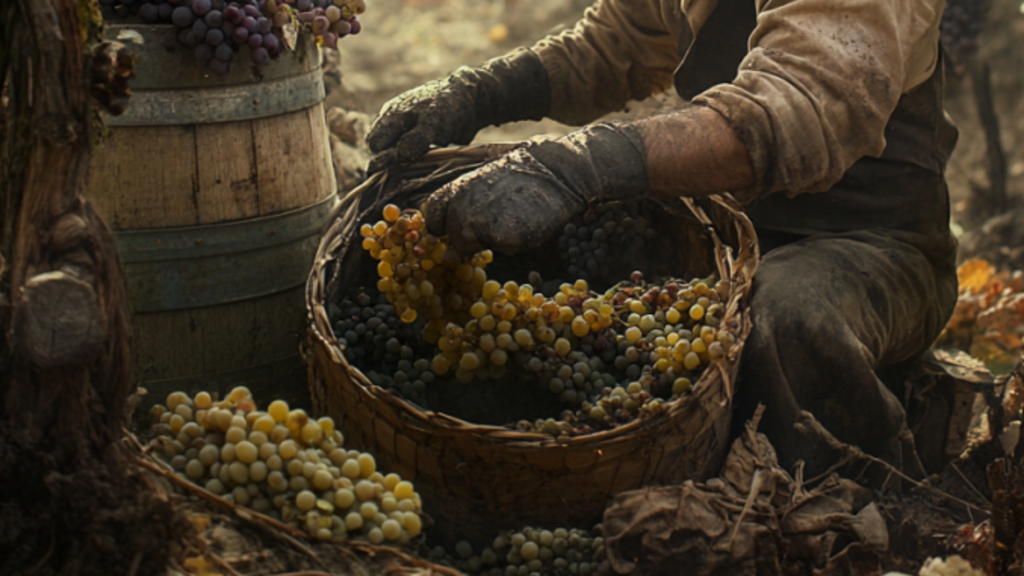
Tannins are plant-based compounds naturally present in the grape skins, seeds, and stems. During the production of red wine, the grapes are fermented together with their skins and seeds, allowing tannins to transfer into the must through a process called maceration. This process not only gives red wine its characteristic color but also provides structure and longevity.
Interestingly, tannins are odorless but have a slightly bitter taste. They create a distinctive mouthfeel, drying out the tongue and sometimes the palate. It is precisely this sensation that makes tannins so intriguing for many wine enthusiasts.
The Role of Tannins in Wine
Tannins serve several essential purposes in wine. They bind with other components, helping preserve aromas and flavors over time. Additionally, they act as antioxidants, binding oxygen and protecting the wine from oxidation. This makes tannin-rich red wines significantly more durable than those with a lower tannin content. In fact, winemakers often refer to tannins as the element that "holds the wine together."
The role of wooden barrels is also noteworthy in this context. New wooden barrels, particularly barriques, contribute additional tannins to the wine—up to 20% of a red wine's total tannins can come from the wood. While older barrels have less influence, new barrels often lend the wine sweet, vanilla-like notes. These wood-derived tannins enhance the wine’s complexity but are not as neutral in flavor as the tannins from grapes.
The Quality and Quantity of Tannins
Not all tannins are the same—their quality and quantity significantly influence a wine's character. The finest tannins typically come from the grape skins. Their ripeness and processing determine whether the tannins are perceived as fine, silky, and smooth, or rough, coarse, and astringent. This variability explains why some red wines are considered elegant and balanced, while others may be regarded as harsh or even unpleasantly stringent.
The amount of tannins also varies greatly depending on the grape variety, region, and winemaking process. Wines like Pinot Noir often contain fewer tannins, while varieties such as Cabernet Sauvignon or Nebbiolo are renowned for their pronounced tannic structure. These differences affect not only the taste but also the ideal food pairings and aging potential.
Tannins in White Wine: A big difference
Although tannins are primarily associated with red wines, they are also present in white wines—albeit in much smaller amounts, roughly 10% compared to red wines. This is because, during white wine production, the skins and seeds are usually removed before fermentation. However, white wines aged in new wooden barrels can also absorb tannins, which add structure to the wine.
An Element That Shapes Wine
Tannins are far more than just a bitter component in wine—they are a fundamental element that influences its structure, durability, and flavor. Whether velvety and smooth or rough and bold, tannins shape the character of a (red) wine and are key to its quality. For wine connoisseurs, tannins are a fascinating element worth exploring—one glass at a time.
Cheers! 🍷