Understanding German and Austrian Wine Classifications: A Practical Guide
German and Austrian Wine Classifications Explained
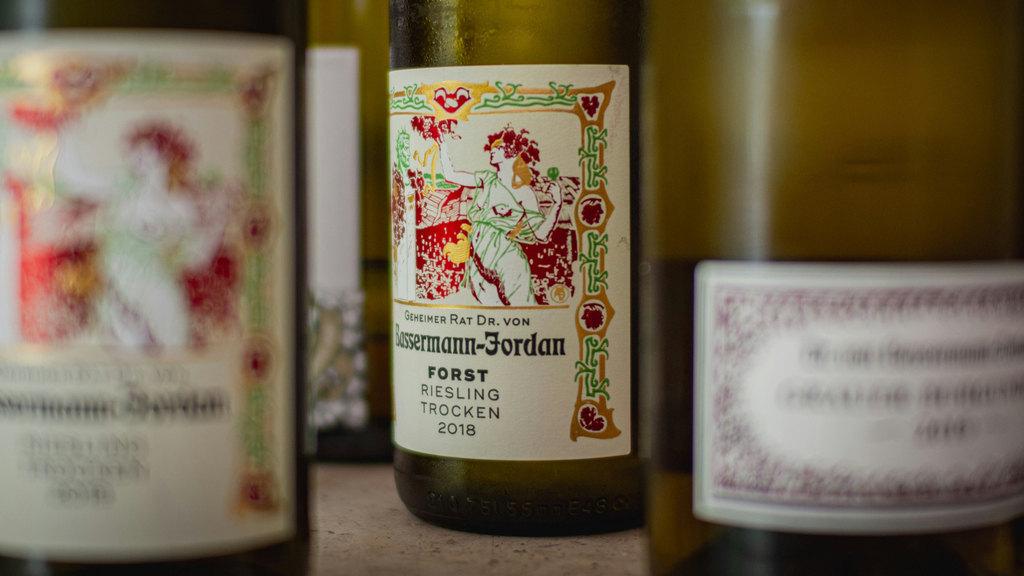
Learn how German and Austrian wine classifications work, from DAC and Grosses Gewächs (GG) to Smaragd, Kabinett, Spätlese and Trockenbeerenauslese.
Why Can German and Austrian Wine Classifications Be So Confusing?
If you work in the wine industry, you have probably encountered this situation before.
A guest picks up a bottle of German or Austrian wine and asks:
- What does GG mean?
- What is the difference between Smaragd and DAC?
- Is a Spätlese wine sweet or dry?
Answering these questions can quickly turn into a lengthy explanation. And the reason is simple: Germany and Austria use wine classification systems that differ in several important ways from those familiar to wine drinkers in countries such as Italy and France.
Things become even more complicated because legally regulated designations of origin and quality coexist with additional classification systems developed by private winegrowers' associations.
To understand today's wine landscape in Germany and Austria, it helps to know how these different systems evolved and what they actually tell us about the wine in the bottle.
Why Are Italian and French Wine Classifications Easier to Understand?
In traditional wine-producing countries such as Italy, France and Spain, geographical origin plays a central role in how wines are classified and communicated to consumers.
The underlying idea is that terroir - the combination of soil, climate, topography and other local conditions - helps shape a wine's identity. A more precisely defined origin can provide more specific information about where a wine comes from and what makes it distinctive.
Designations and classifications such as:
- DOC: Denominazione di Origine Controllata
- DOCG: Denominazione di Origine Controllata e Garantita
- AOC: Appellation d'Origine Contrôlée
- Premier Cru
- Grand Cru
reflect this emphasis on origin, although their legal status and specific requirements differ.
Burgundy provides a well-known example. Within its classification system, Grand Cru represents the highest vineyard classification, while Premier Cru sits below it.
However, these terms do not have one universal meaning across all wine regions. Their significance depends on the applicable regional rules and classification system.
The common principle is that geographical origin plays a central role in communicating a wine's identity and, in many cases, its perceived quality.
Why Are German and Austrian Wine Classifications Different?
Germany and Austria developed their wine classification systems along somewhat different historical paths.
In Germany, the ripeness of the grapes at harvest has traditionally played an important role in determining a wine's legal classification. One key measure is must weight, which indicates the density of grape must and provides an indication of its sugar concentration.
This tradition gave rise to the familiar German Prädikat categories:
- Kabinett
- Spätlese
- Auslese
- Beerenauslese
- Trockenbeerenauslese
- Eiswein
These are legally defined categories with specific requirements relating to the grapes and their production. Depending on the Prädikat, the rules concern factors such as minimum must weight, grape ripeness, selection and the condition of the grapes at harvest. Eiswein, for example, must be made from grapes that are frozen when harvested and pressed.
One important distinction: a Prädikat does not automatically tell you how sweet the finished wine will taste.
Kabinett and Spätlese wines, for example, can be made in dry or sweeter styles, provided they meet the relevant legal requirements. Beerenauslese and Trockenbeerenauslese, by contrast, are traditionally associated with intensely sweet wines.
Prädikat classifications also do not directly classify the quality of an individual vineyard.
As interest in terroir and vineyard-specific characteristics has grown, many producers have placed greater emphasis on geographical origin. This has led to additional classification systems that focus on the region, the village or the individual vineyard rather than relying primarily on grape ripeness.
Today, Germany and Austria combine different approaches: legally defined wine designations on the one hand, and additional classification systems developed by winegrowers' associations on the other.
Where Does the Confusion Really Come From?
One of the biggest challenges is that not all wine classifications follow the same principles or have the same legal status.
Alongside national wine legislation, private associations establish their own criteria for classifying wines and vineyards. These rules apply within the scope of their respective associations and do not automatically have the same legal standing as official wine designations.
In Austria, several systems and organisations are particularly relevant.
DAC – Districtus Austriae Controllatus
DAC is a legally regulated designation of origin for Austrian quality wines.
Each DAC region has specific rules concerning factors such as permitted grape varieties, production methods and wine styles. The aim is to communicate the characteristic identity of a particular wine-growing region.
DAC is therefore not simply a quality level that can be directly compared with every other classification system.
Vinea Wachau Nobilis Districtus
Vinea Wachau is a winegrowers' association representing producers in the Wachau wine region.
It is particularly well known for three registered wine-style designations:
- Steinfeder: Light, fresh and fragrant wines.
- Federspiel: Medium-bodied wines that balance freshness, elegance and structure.
- Smaragd: Fuller-bodied, concentrated wines with considerable complexity and ageing potential.
These terms primarily communicate wine style rather than a universal ranking of vineyard quality. Their use is restricted to eligible member wineries under the association's rules. Traditionally, they have been associated with dry wines made without oak influence.
Importantly, Wachau DAC now complements the established Vinea Wachau designations, with its own origin-based classification into regional wines (Gebietswein), village wines (Ortswein) and single-vineyard wines (Riedenwein). The systems therefore need to be understood in their current context rather than treated as mutually exclusive alternatives.
ÖTW – Österreichische Traditionsweingüter
The Österreichische Traditionsweingüter, or Traditional Wineries of Austria, is an association dedicated to identifying and classifying significant vineyard sites.
Erste Lage classification focuses on the characteristics and potential of individual vineyards, including their soils, geology, exposure and other factors that influence wine style.
The objective is to make differences in origin more visible and to help consumers understand what distinguishes one vineyard from another.
STK – Steirische Terroir- und Klassikweingüter
STK is an association of Styrian wine estates that emphasises terroir, regional identity and its own standards for wine production and vineyard classification.
Its approach reflects the broader movement towards communicating wine quality through origin and vineyard characteristics.
VDP – Verband Deutscher Prädikatsweingüter
Germany has its own influential private classification system: the VDP, or Association of German Prädikat Wine Estates.
The VDP operates alongside German wine legislation and uses a four-tier, origin-focused classification:
- VDP.Gutswein: Estate wine.
- VDP.Ortswein: Village wine.
- VDP.Erste Lage: Wine from a classified vineyard site.
- VDP.Grosse Lage: Wine from one of the association's highest-classified vineyard sites.
Dry wines from VDP.Grosse Lage vineyards are designated VDP.Grosses Gewächs (GG), provided they meet the relevant association requirements.
The VDP classification is based on the principle that a more precisely defined origin can communicate a wine's distinctive character and quality potential. It is a private association's classification, not a separate category of German wine law.
The key takeaway is that two wines from the same region can carry different designations because they follow different classification rules. A Case Study from the Wachau: FX Pichler:
The Wachau offers an interesting example of how wine classification and association membership can intersect.
FX Pichler is a renowned winery in the Wachau, a region known for its distinctive Riesling and Grüner Veltliner wines.
The Steinfeder, Federspiel and Smaragd designations are closely associated with Vinea Wachau. However, the use of these designations is governed by the association's membership and labelling rules.
When a winery leaves an association, its eligibility to use that association's designations may change, even though the geographical origin of its vineyards remains the same.
For consumers, this illustrates an important point: a classification is not necessarily a permanent or universal label of quality. Its meaning depends on the system behind it.
What About German and Austrian Sweet Wines?
Prädikat wines can be easier to understand because the categories are legally defined and have specific requirements.
The best-known German Prädikat designations are:
- Kabinett
- Spätlese
- Auslese
- Beerenauslese
- Trockenbeerenauslese
- Eiswein
These categories are based on legally defined criteria relating to the grapes and their production. Minimum must weights vary according to the grape variety and wine-growing region. Some categories also require particular levels of ripeness, selective harvesting or specific grape conditions.
However, one distinction remains essential: Prädikat and sweetness are not the same thing.
Kabinett and Spätlese wines can be made in dry or sweeter styles. Beerenauslese and Trockenbeerenauslese are classic categories for sweet wines made from selected overripe or botrytised grapes, while Eiswein is produced from grapes harvested and pressed while frozen.
The complexity often becomes more apparent when looking at dry wines.
In Germany, a bottle can carry a legally defined Prädikat designation as well as a VDP classification, with each communicating different information under a different set of rules.
In Austria, consumers may encounter DAC, Smaragd, ÖTW or STK designations. These cannot simply be placed on one universal quality pyramid because they represent different systems, criteria and purposes.
Understanding what each designation actually communicates is more useful than trying to rank them all against one another.
How Are Wine Classifications Evolving?
Over recent decades, many winemakers and wine organisations have placed increasing emphasis on geographical origin as a way of communicating wine identity and quality.
Instead of focusing exclusively on the broader wine-growing region, modern classification approaches increasingly distinguish between regions, villages and individual vineyard sites.
The VDP in Germany and the ÖTW in Austria are examples of organisations pursuing this approach.
Their systems share some similarities with the French concepts of Premier Cru and Grand Cru, particularly in their focus on vineyard origin. However, they are not directly equivalent: their legal foundations, criteria and geographical frameworks differ.
The Italian wine region South Tyrol offers another interesting example.
The region already has the legally regulated designation Südtirol DOC / Alto Adige DOC. Additional geographical designations, including UGA (Unità Geografiche Aggiuntive), aim to communicate the origin of certain wines in greater detail. The legally regulated Vigna designation can also identify wines from qualifying vineyards, subject to the applicable requirements.
The broader objective is to provide consumers with more precise information about where a wine comes from without making the classification system unnecessarily complicated.
Ultimately, the success of any classification depends not only on the rules behind it, but also on how clearly those rules are communicated.
What Should Wine Professionals Explain to Their Guests?
For sommeliers, restaurateurs and wine merchants, explaining every abbreviation and classification level is rarely the most effective way to help a customer choose a wine.
What matters is translating the information on the label into something meaningful for the person making the decision.
Three simple questions can help:
- Where does the wine come from? Its origin can provide clues about the region, terroir and characteristic features of the wine.
- What style can I expect? Grape variety, winemaking techniques, residual sugar and acidity all help explain what the wine may taste like.
- What makes this wine special? A distinctive vineyard, the winemaker's approach or the conditions of a particular vintage may explain what sets it apart.
Answering these questions helps guests understand their options and make more informed choices.
Because good wine advice is not about knowing the greatest number of abbreviations. It is about helping someone find the right bottle for the right occasion.
Cheers 🍷
This article was created in collaboration with Pretzhof Selection.