When is the grape harvest?
The grape harvest - How do the grapes get to the wine cellar?
The grape harvest is one of the most important moments in a winemaker's year. The ideal time for harvesting grapes depends on several factors.
Grape Harvest or "Wimmen"?
In South Tyrol, people traditionally refer to the grape harvest "Wimmen." This term is derived from the local dialect and describes the act of picking grapes. Particularly important in South Tyrol is the term "Handlese" (manual harvest). While many other regions and countries opt for the faster machine harvest, South Tyrolean winemakers remain faithful to tradition.
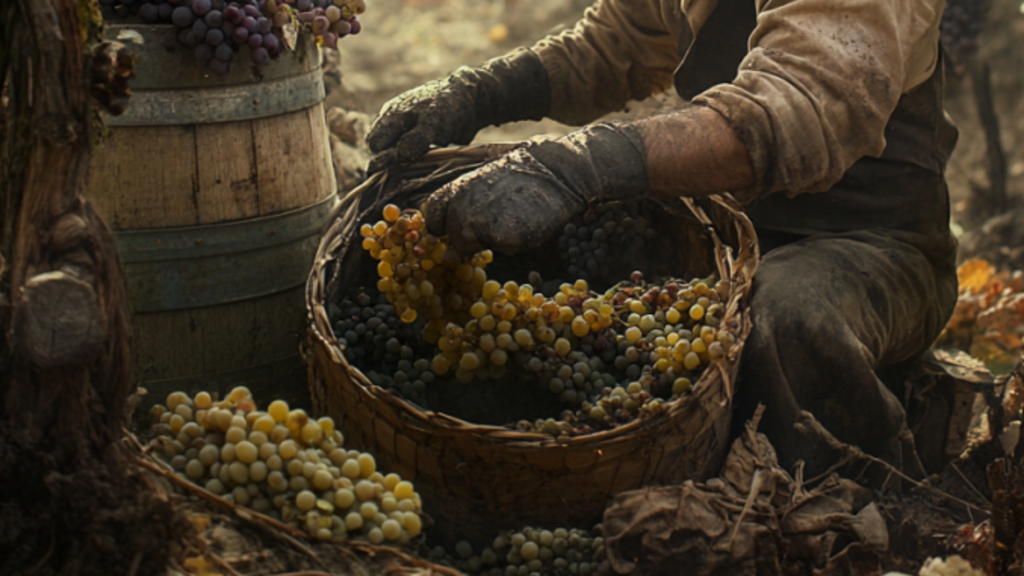
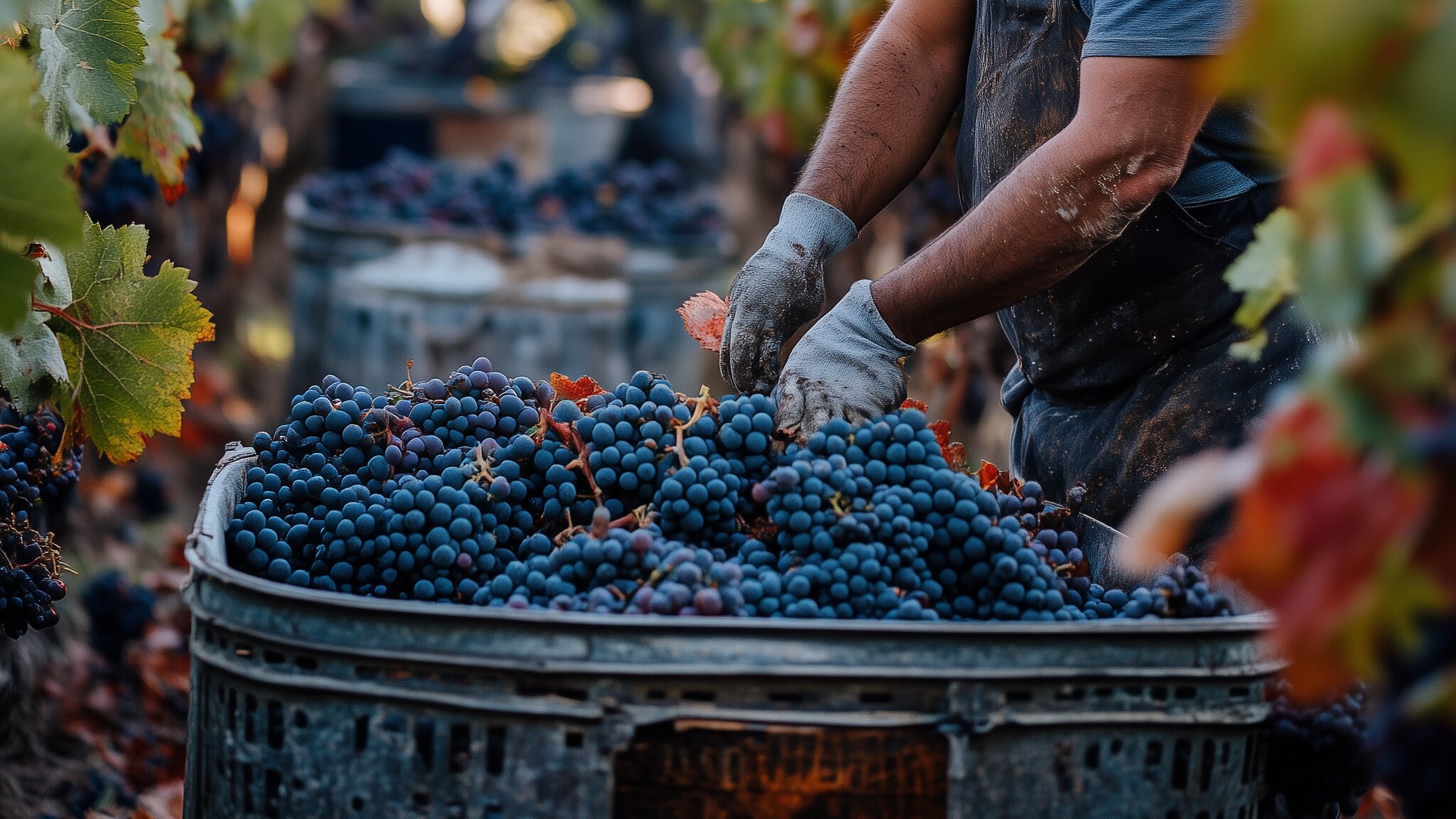
Grapes are harvested by hand to ensure the best possible quality. The ripe grapes are cut from the vine with a pruning shear, collected in baskets, and brought to the cellar for vinification. Moreover, in South Tyrol, winemakers are commonly referred to as "Weinbauern" - translated literally to "wine farmers".
When is the grape harvest?
The ideal time for harvesting grapes, or "Wimmen," depends on various factors such as the grape variety and the weather. The grape harvest always takes place in autumn. South of the equator, in countries like Australia or South Africa, grapes are harvested from late January to April—this is because those months mark autumn in those regions. In southern Europe, the grape harvest starts as early as August, while in central Europe it can extend into November. In South Tyrol, "Wimmen" typically begins in mid-September. Winemakers, known in South Tyrol as "Weinbauern," carefully monitor the weather during these weeks to achieve the full ripeness of the grapes.
Full ripeness refers to the moment when a grape has reached its optimal level of ripeness, having developed the perfect balance of sugar, acidity, and flavors. At this stage, all the taste components of the grapes are at their peak, providing the best conditions for winemaking. If the grapes are harvested too early, they have too little sugar and are too acidic. If they are harvested too late, when they are overripe, the sugar content is too high, and the acidity is lacking. The timing of the harvest significantly influences the final taste of a vintage.
In addition to full ripeness, aromatic ripeness is also evaluated. The winemaker tastes the berries to check for thin skins, lignified seeds, and the overall flavor profile to determine the best time to harvest.

The second and third passes
Unlike machine harvesting, where all grapes are picked regardless of their ripeness, manual harvesting involves careful selection. Unripe grapes are left on the vine to ripen further. In many vineyards, a second or even third pass through the vineyard occurs a week or two later to pick these grapes. This process is known as "staggered harvesting."
Heat can be dangerous
An interesting aspect of the grape harvest is that it often takes place in the early morning or late afternoon to avoid the hottest part of the day. In especially warm regions like California or Australia, grapes are sometimes harvested at night under floodlights to keep them cool until they reach the cellar. The reason is simple: heat can trigger unwanted spontaneous fermentation in the grapes, which is to be avoided. Grapes are picked in small baskets to prevent them from being crushed by their own weight, and the baskets should be taken to the cellar as quickly as possible.
What happens next?
After the harvest, the real vinification process begins in the cellar. White wines like Sauvignon Blanc or Gewürztraminer are often pressed immediately to preserve their freshness. For red wines, like the typical South Tyrolean Lagrein, the grapes are first left on the skins (maceration) to extract color and robust aromas. Many steps follow before the grapes finally find their way into a wine bottle.
In the case of orange wines, white grapes are left to macerate with their skins for an extended period, giving the wine a complex and distinctive aromatic profile.
Cheers 🍷